
Title: AI and the automation of deception
One of the consequences of the rise of generative AI is the growing automation of communication processes. The implications of these processes for many crucial dimensions of communication, however, are still largely unexplored. This Masterclass interrogates the impact of the AI turn on the dynamics shaping deception in mediated communication. I consider, in particular, three key dimensions of change. First, the incorporation of generative AI into all sorts of media platforms and products leads to deception being increasingly normalized, becoming central to the very functioning of digital media to the point that it appears indistinguishable from the media themselves. Second, the training of generative AI on data produced by humans means that the knowledge about human communication, which prepares the development of deceitful strategies and tactics, is automated and performed at scale. Third, new forms of agency emerge that are making traditional theories of deception in communication and media studies, which traditionally focused mainly on the agency and intentionality of the deceiver, increasingly unable to capture the complexity of ongoing dynamics. It is thus necessary to reframe agency in deception across a triangular model whereby three actors – i.e. the deceiver, the deceived, and the algorithmic structures underpinning their interaction – all play an active role. Through a range of examples at the interaction between AI and communication, the talk illuminates nuanced mechanisms of deception that are often not understood as such but are becoming integral to people’s experiences with media platforms in the age of generative AI.
Bio
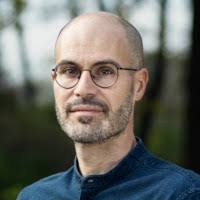 Simone Natale is an Associate Professor in Media Theory and History at the University of Turin, Italy, and an Editor of the journal Media, Culture & Society. He is the author of numerous publications including his monograph Deceitful Media: Artificial Intelligence and Social Life after the Turing Test (Oxford University Press, 2021), which has been translated into Chinese, Italian, and Portuguese, and over 50 peer-reviewed articles in journals such as New Media and Society, Journal of Communication, Communication Theory, Information, Communication & Society, and Communications of the ACM. He was awarded research grants by institutions including the AHRC and the ESRC in the UK, the Humboldt Foundation in Germany, and the Ministry of University and Research in Italy, and has worked as expert on AI for leading international institutions and in projects such as the Global Partnership for Artificial Intelligence (GPAI) and the Brookings Institution’s Global Task Force on AI in Education.