
Research Seminar - The Plague of Fascination

The Plague of Fascination
Presented by Professor Murray Pomerance (Ryerson University)
Date: 27 April, 2018
Time: 3pm-4pm
Location: Digital Learning Space (Room 224, Level 2), Joyce Ackroyd Building (#37)
Abstract:
This talk will explore some historical roots and contemporary outcomes of a widespread cultural bias against spectatorial rapture in response to cinema: performance and its vicissitudes; the suspicion of pleasure and its substitution by “cinephilia”; illumination as manipulation of belief; asceticism and effect.
Presenter:
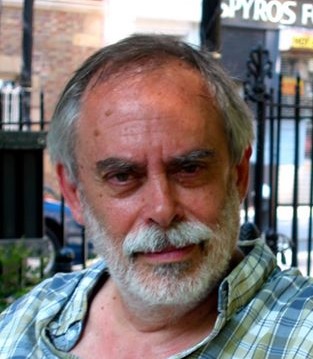
Murray Pomerance is Professor in the Department of Sociology at Ryerson University and the author of numerous volumes, most recently The Man Who Knew Too Much (BFI 2016) and Moment of Action: Riddles of Cinematic Performance (Rutgers 2016). His book A Dream of Hitchcock is forthcoming. He has edited or co-edited Close-Up, Hamlet Lives in Hollywood, Cinema and Modernity, A Little Solitaire, and more than two dozen other books. He edits the “Horizons of Cinema” series at SUNY Press and “Techniques of the Moving Image” at Rutgers.
About Research Seminar and Workshop Series
School of Communication and Arts Research Seminar Series
The research seminar and workshop series occur each semester, each with a different topic and guest speaker from UQ or otherwise.
Friday, 25 September Hybrid: Online via Zoom and in person at SCA Writers' Studio 09-612 | "Questions" - A.I. 'Morphology' and Labour in Blade Runner (Parker) and There’s Something About Autism: a case study in autistic dramaturgy in playwriting (Wilson) | Talia Parker and Sarah Wilson |
Friday, 9 October Hybrid: Online via Zoom and in person at 09-738 | Imagined pasts/imagined futures Seminar series "Alien Machines" | Prof Simone Natale (George Watson visiting speaker) With Dr Adam Dodd (UQ Digital media) as correspondent |
Friday, 16 October Hybrid: Online via Zoom and in person at SCA Writers' Studio 09-612 | Imagined pasts/imagined futures Seminar series Imagined Pasts (Kim Wilkins) Imagined Futures (Helen Marshall) | Prof Kim Wilkins and A/Prof Helen Marshall |
Friday, 23 October Hybrid: Online via Zoom and in person at SCA Writers' Studio 09-612 | Imagined pasts/imagined futures Seminar series Brisbane’s coming of age expo 88 to Brisbane 2032 | Dr Sarah Thomassen |